How to Choose the Right Lighting for Your Home Renovation Jul 09, 2026
First, evaluate the purpose and layout of each room. Lighting should not only illuminate a space but should complement the room's function. For instance, in a kitchen, you may need bright, focused lighting for tasks like chopping and cooking. Pendant lights over counters or a central chandelier can serve this purpose well. In living rooms, consider softer, ambient lighting that promotes relaxation. Floor lamps, wall sconces, and dimmer switches are excellent choices for such areas, as they allow for flexible mood setting.
Consider the style you wish to evoke in your home. Lighting provides an opportunity to express personality and taste. Whether your home exudes a modern, traditional, or eclectic vibe, there are lighting options that correspond. For contemporary aesthetics, sleek fixtures in metals and straightforward geometric shapes work wonders. In contrast, ornate chandeliers or vintage lamps fit traditionally styled homes. Paying attention to these stylistic details ensures that the lighting does not clash but harmonizes with your overall decor theme.
Energy efficiency is another essential consideration during a home renovation. With growing awareness and responsibility towards the environment, opting for LED lighting is a practical choice. LEDs use significantly less energy compared to traditional bulbs, which reduces your electricity bill and carbon footprint. Although the initial cost may be higher, the long-term savings and environmental benefits more than justify the investment.
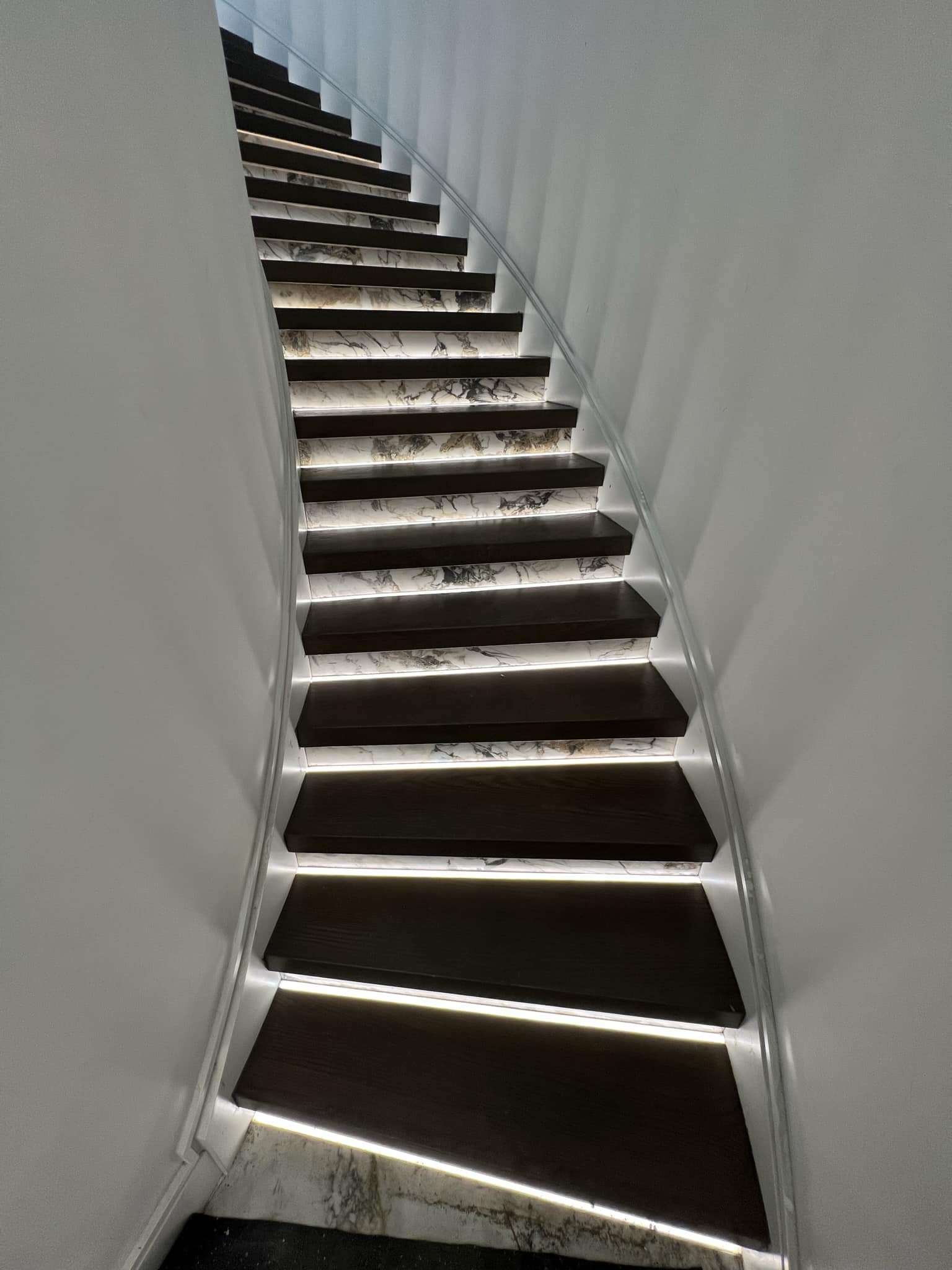
Layering lights is a technique often recommended by professionals at G&R Electric to enhance the functionality and texture of a room. This involves incorporating different types of lighting: ambient, task, and accent. Ambient lighting provides the primary illumination for a room. Task lighting, as the name suggests, is focused where activities are performed, such as reading lamps in bedrooms or under-cabinet lights in kitchens. Lastly, accent lighting highlights specific features, such as artwork or architectural details, adding depth and dimension.
When renovating, also pay attention to the color temperature of the bulbs you choose. Measured in Kelvins (K), this determines the warmth or coolness of the light. Warmer tones (around 2700K to 3000K) are suitable for living spaces to create a cozy feeling, while cooler tones (5000K) are ideal for areas requiring focus and precision, like home offices or workplaces.
Finally, ensure the lighting fixtures you select are appropriately sized for the spaces they illuminate. Oversized lighting can overwhelm small rooms, while tiny fixtures might get lost in larger spaces, failing to provide adequate light. Make careful measurements or consult with a lighting designer to choose sizes that are proportional to the space and ceiling height.
In conclusion, the right lighting can transform your home into a comfortable, stylish, and energy-efficient sanctuary. By considering factors such as function, style, energy efficiency, layering, color temperature, and size, you’ll make informed choices that enhance both the beauty and practicality of your home. G&R Electric is always here to help guide you through each step of your lighting journey, ensuring your renovation reflects your vision and meets your needs.
/filters:no_upscale()/filters:format(webp)/media/afd5b25e-266d-4459-b3db-4fecacd04099.jpeg)
/filters:no_upscale()/filters:format(webp)/media/475332f1-7f4e-42fb-9c0e-ee888bad818b.jpeg)